🎧 EXCLUSIVE AUDIOBOOK NOW AVAILABLE on this page
New book | Foreword by Ulrika Jonsson
You thought it was just your family.
It's one in four.
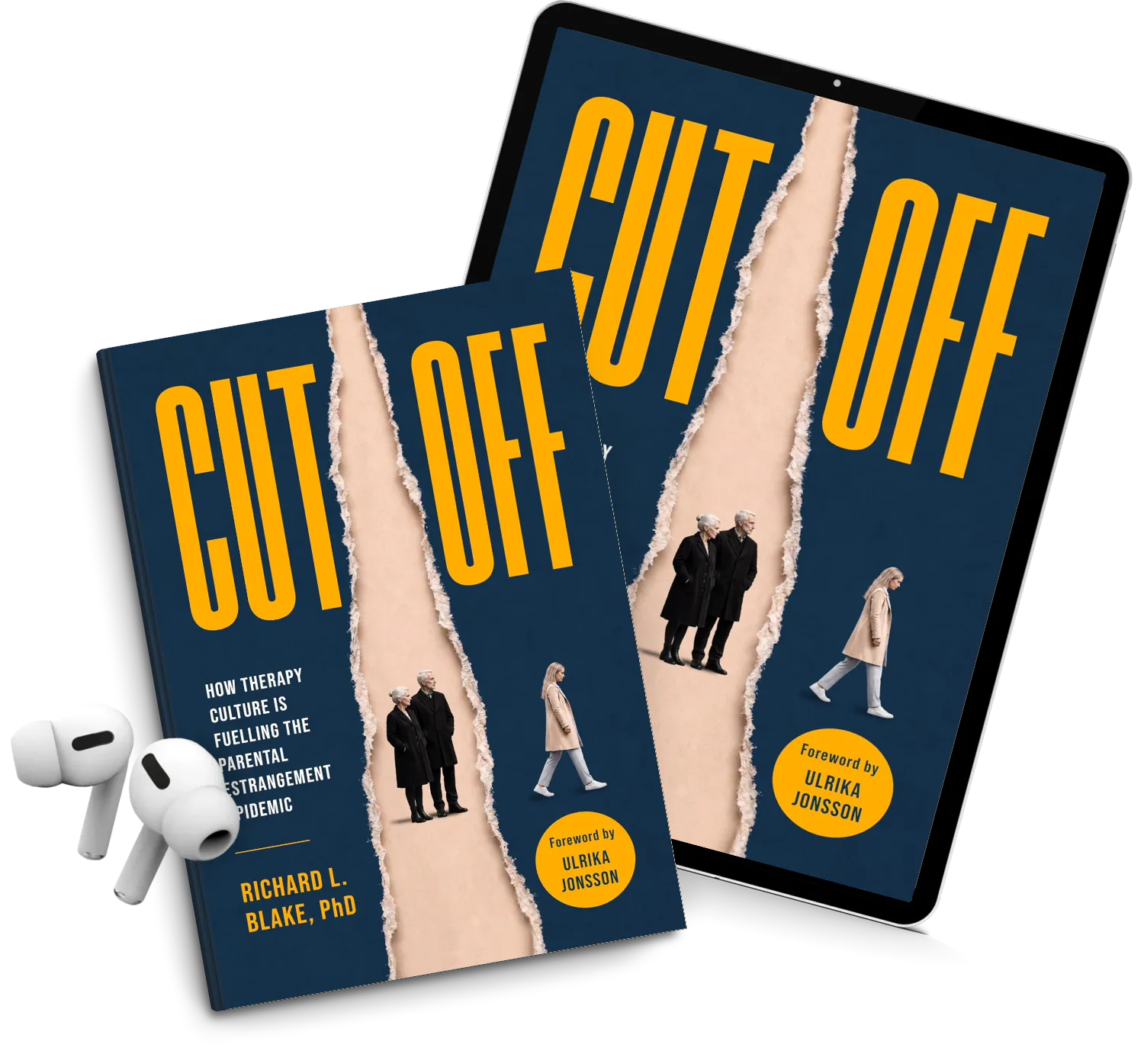
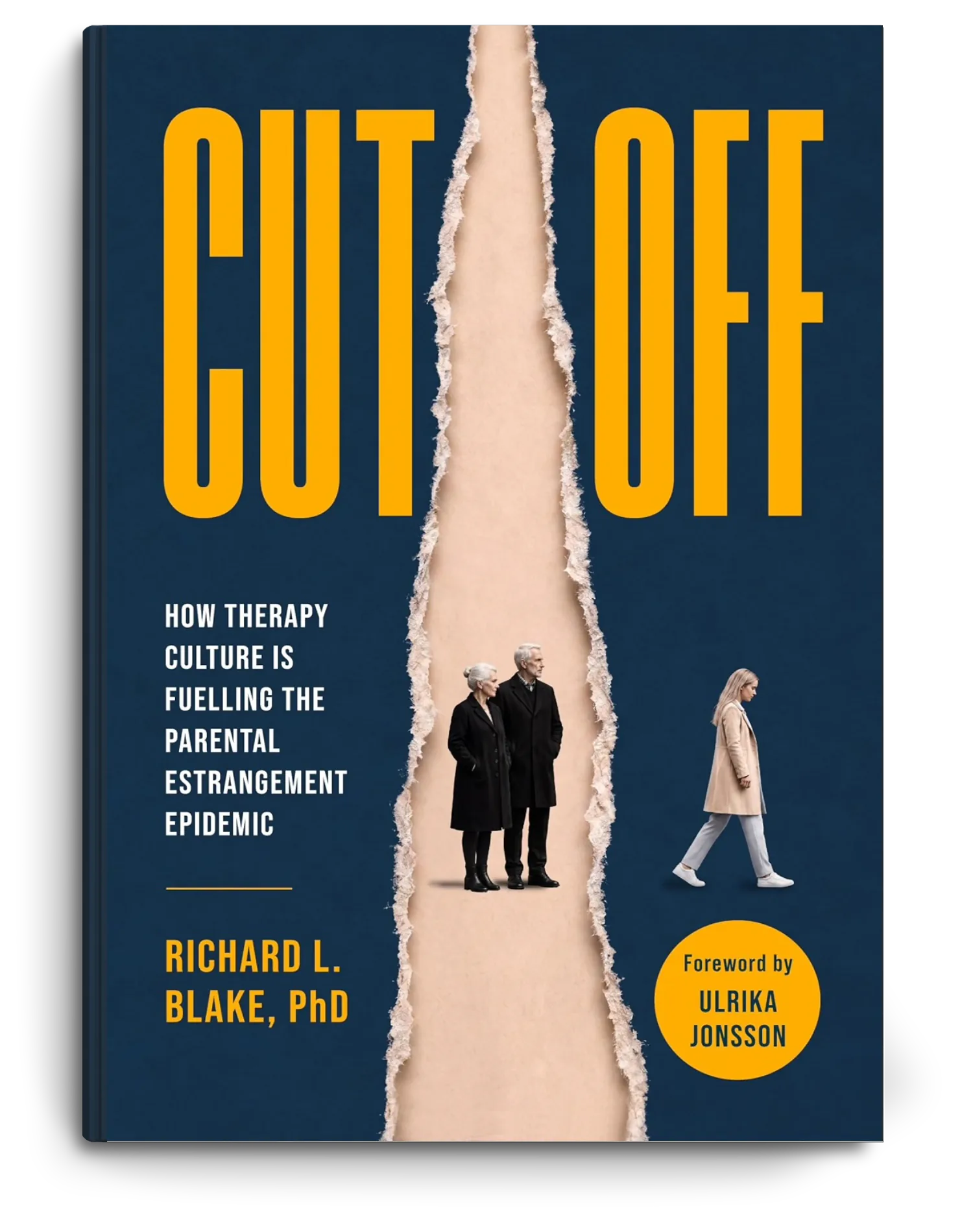
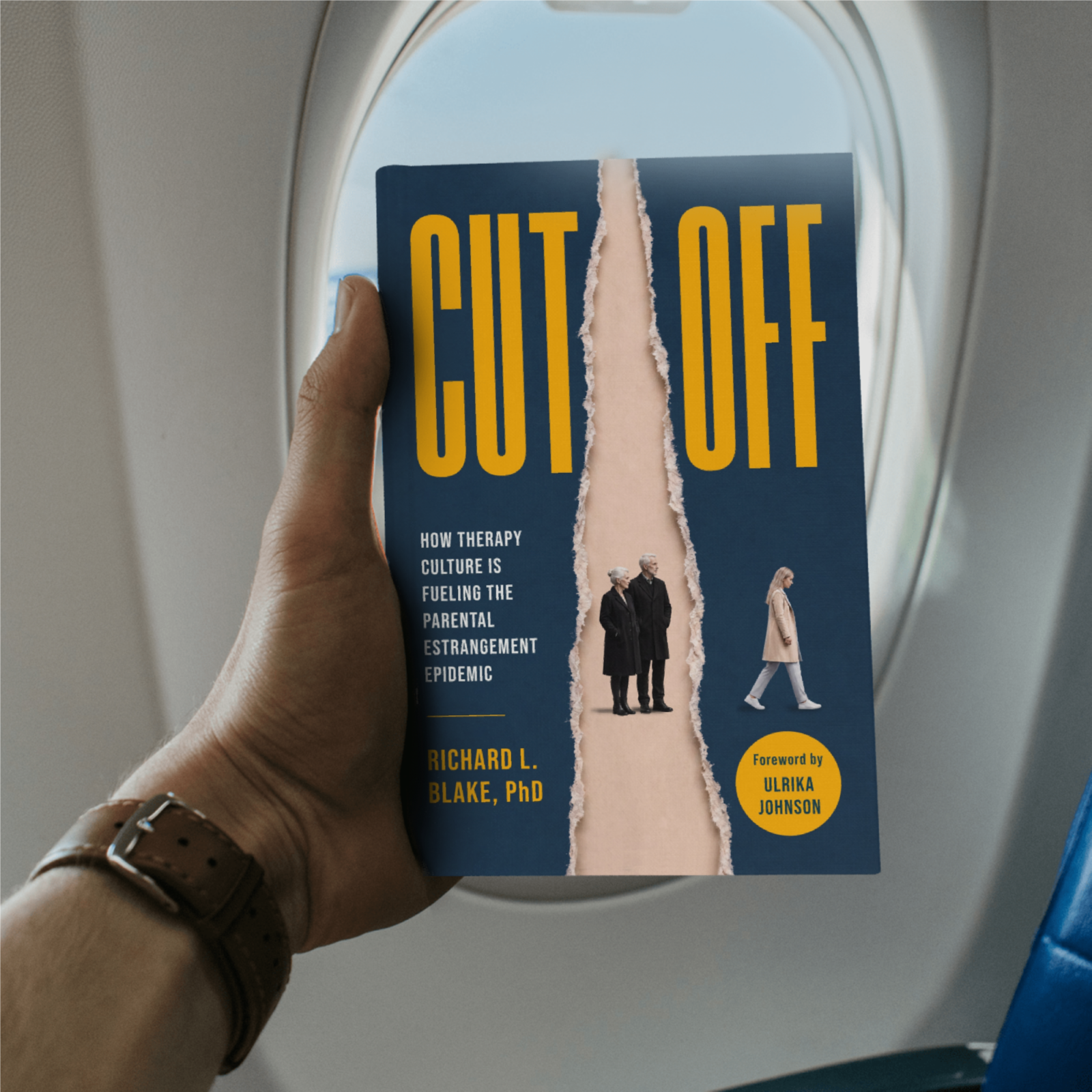
Inside his brand new book, Psychology PhD and researcher Richard L. Blake examines how therapy culture is fuelling the parental estrangement epidemic.
AVAILABLE NOW IN EBOOK AND AUDIOBOOK
It's not only you. It never was.
You raised them. Then a stranger's words arrived.
Imagine finally understanding what happened.
This isn't a case against therapy.
A culture rewrote your family. Not you.
He's a researcher. He went and found the data.
Cut Off is the map nobody handed you.
AVAILABLE NOW IN EBOOK AND AUDIOBOOK
This is not a self-help book
It won't tell you how to win your child back, or how to move on. It shows you, study by study, what really happened to your family. So the 3am replaying stops. The blame loosens. And you can finally explain this to yourself, and to others, without shame.
He didn't go looking for this.
It found him.
Richard L. Blake never planned to write about estrangement. He was writing about the science of mental health, and where the industry around it had gone wrong.
Then a reel he posted linking therapy culture to family cutoffs was watched 2.2 million times. "In my mind I had just raised a question," he writes. "In the comments section, it turned out, millions of people had been waiting for someone to raise it." The comments weren't arguments. They were parents, from nothing-alike situations, describing the same loss in the same borrowed words. So he did what a researcher does. He read the studies.
He didn't write this book to show what he knows. He wrote it because these parents were lost in something without a map, and so was he. This is the map, so you spend weeks understanding it instead of years.
AVAILABLE NOW IN EBOOK AND AUDIOBOOK
Where the words really came from
It rarely arrives as a confrontation. A message, an email, sometimes a letter. Sometimes only an argument that never resolved and a silence that kept extending. Whatever form it took, the words didn't sound like your child. They sounded like a brochure. Call it the letter, whatever yours was.
You put it down and went looking for the crime. The holiday that went wrong. The thing you said when you were tired. None of it weighs what the letter says it weighs. You draft messages you don't send. You tell almost no one, because the one time you did, you watched their face decide.
Call it estrangement culture.
Therapy's vocabulary, loose from the consulting room. It treats family rupture as health, calls ordinary imperfection abuse, and has an industry of forums and influencers ready to confirm the diagnosis, and no one whose job it is to check it.
Parents write to Richard from different countries, decades and families. The words are identical.
Narcissist. Gaslighter. Toxic. Unsafe. Boundaries.
One dictionary, and every entry describes something a parent did to a child. None run the other way.
You haven't been failing to understand your child. You've been trying to understand a script written somewhere else. See the script, and the search for the crime can stop.
AVAILABLE NOW IN EBOOK AND AUDIOBOOK
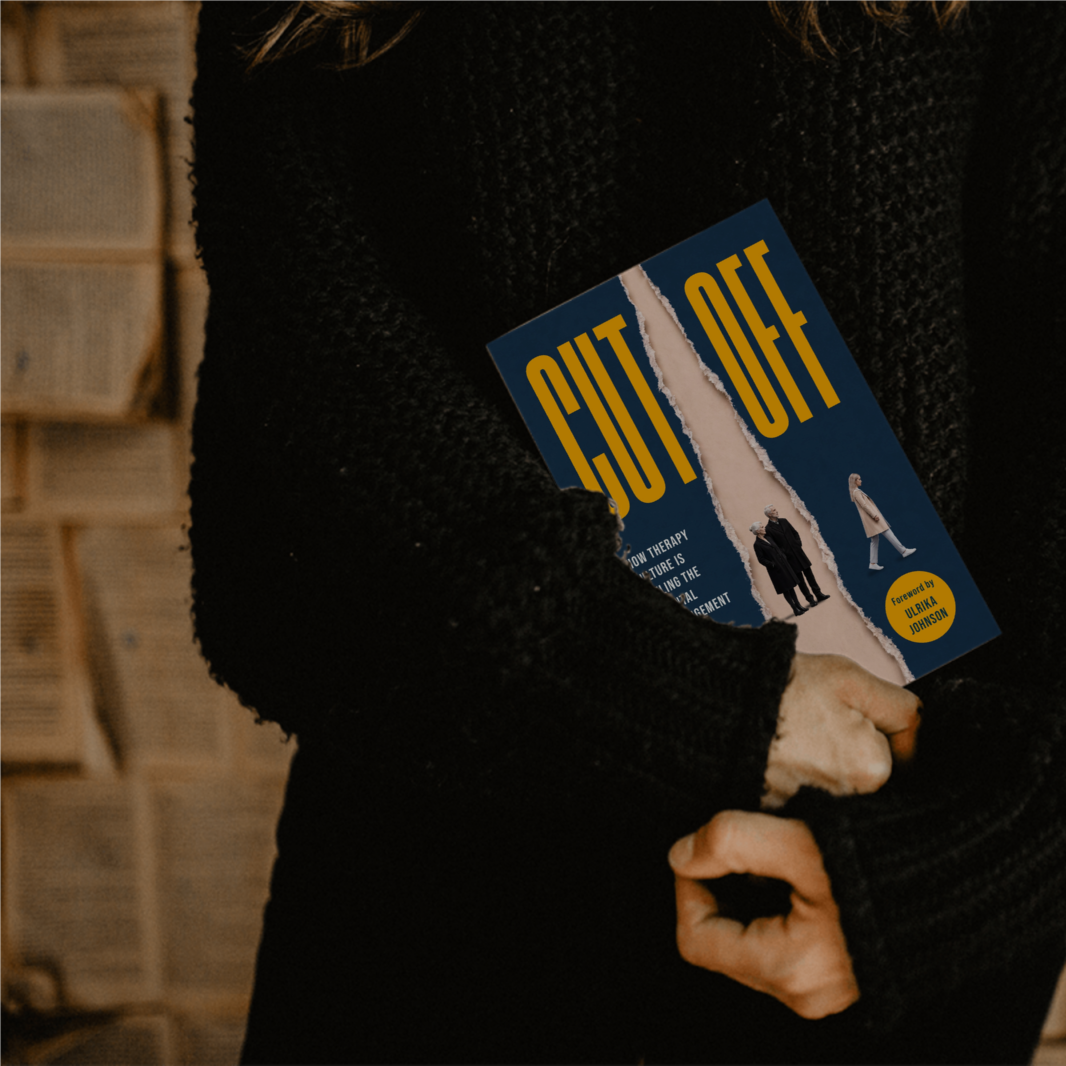
Some of what you tried made it worse
You've probably tried the obvious things. Apologising for a charge you couldn't identify. The long message, then the short one, then a flurry of them. Answering the diagnosis point by point. Going through a sibling, or a grandchild, to get a message in. Reading everything about narcissists to check whether it's you. Maybe a therapist who listened, but seemed to have already decided.
Some of those were mistakes. I won't pretend otherwise, because a parent who keeps making them keeps the door shut. The most common ones are covered in the companion course, along with what to do instead.
But the bigger error was the one you couldn't see. Every one of those attempts was made inside a story you didn't write. You can't reason your way out of a framework you've never been allowed to see whole. This book shows it to you whole.
AVAILABLE NOW IN EBOOK AND AUDIOBOOK
Stop asking what you did wrong
One finding sits under everything in this book. In the largest studies of estrangement, most ended. Most children came back. Nobody told the parents.
Understanding. What reached into your family and why, so the 3am replaying ends.
"You are not the whole explanation. You may be part of it. Both things can be true."
Hope with evidence behind it. Nobody can speak to your case. The book can tell you what's true for most.
The mechanisms have names now. Contagion. Concept creep. The single-witness diagnosis. See them, and the letter reads differently. So does your part in it.
Turn the page.
AVAILABLE NOW IN EBOOK AND AUDIOBOOK
THE LETTER ISN'T THE VERDICT
When the letter arrives, or the silence, it reads like a ruling. Charges, a sentence, no appeal. So parents do what anyone would do in the dock.
What you've been told: the letter is the truth about you. So you defend it line by line, or you confess to charges you can't recognise, or you go quiet and hope time softens it. All three harden it. Defending gets read as not listening. Confessing signs a statement you don't believe. Silence gets read as guilt.
What the research shows: the letter is evidence, not a verdict. Evidence of a vocabulary that reached your child from outside the family. Of a community that rewards the most extreme version of the story. Of a pipeline that runs from a feed, or a consulting room, to a cutoff, and has run the same way through millions of families. Read it that way and you stop standing trial. You see where your child actually stands, and how they got there, which is the first clear thing you've seen since it arrived.
That's the shift the whole book makes. Not from guilty to innocent. From accused to informed.
What readers are saying
Inside the book
Cut Off is thirteen chapters in four movements. It starts where you are, with the letter that didn't sound like your child, and works outward: how the words spread, what the story leaves out, and what the research says about how these ruptures actually end. Every claim carries its citation, so what you're holding by the last page is not an opinion about your family. It's an account you can check.
The Confusion
Why the letter sounded like a brochure. The scale of estrangement, who cuts off whom, and what the research says about why. You'll stop believing it's only you.
How It Spreads
Suffering goes viral. How a vocabulary travels from consulting rooms and comment sections into ordinary families, and why the same script arrives in households that have nothing else in common.
What the Story Leaves Out
The illness in the room, inherited temperament, memory under pressure, and the therapist who only ever met one side of the story.
The Arguments and the Grief
"I don't owe you anything," politics as rupture, the victim position, and the loss that has no name. Then what the reconciliation data actually shows.
What you get today
13 chapters: the full map of how estrangement culture works.
The ebook. Read it on your phone, tablet, computer or Kindle.
The audiobook. Only available here. Listen on your phone or computer.
The reconciliation data: hope that never makes the headlines.
The Grief That Has No Name: your loss, finally named.
Resources appendix: where to go next for your situation.
Everything is in your reader portal within minutes of ordering.
What another year of not knowing costs
You know what this has cost. The birthday that passed with no message. The grandchild you learned about secondhand. The explanation you've built and rebuilt at three in the morning, still not sure it holds. You have carried this with more dignity than most people would manage, and mostly alone, because the culture decided your pain was evidence against you.
I don't believe you have to keep carrying it blind. Understanding won't bring anyone back, and I won't pretend it does. But it does something. It ends the bewilderment. It hands you the more complicated account, the one where you're not the whole explanation. That's where anything better starts.
AVAILABLE NOW IN EBOOK AND AUDIOBOOK
WHAT OTHERS ARE SAYING
Questions you might have
How quickly will I receive the book?
Straight away. Your ebook and audiobook are in your reader portal within minutes of ordering.
Is this worth the price?
The question isn't the money. It's whether another year of not understanding what happened costs you more than the price on this page.
What formats does the book come in?
Cut Off is available here as an ebook and an audiobook. The audiobook is only available on this page. The paperback is sold on Amazon.
I've tried other things and nothing has worked.
So had the thousands of parents who wrote to me. Most advice starts from the verdict in the letter. This book starts from the research on how that verdict was built.
Is this just a case against therapy?
No. My wife is a therapist, and so are members of my family. Therapy done well helps a great many people. This is about a culture that grew beyond the clinic and lost the safeguards.
Is my payment information secure?
Yes. Every order runs through a secure, encrypted checkout handled by a trusted processor. Your details are never stored.
Can I speak to someone about my order?
Of course. Email us here and we'll reply within one business day.

Richard L. Blake
I'm not a life coach
I never set out to write about estrangement. I began training as a psychotherapist, then left part way through when I could no longer defend what the profession's own data was telling me. I took the research route instead, earned a PhD in psychology, and ran the largest trial of its kind in my field. Then I posted a short reel linking therapy culture to family cutoffs. It got 2.2 million views, and the comments weren't arguments. They were parents describing the same loss in the same borrowed language.
I'm not a life coach, and I have no stake in the estrangement industry, which is why I could examine it without flinching. What I found is that a field built on wellbeing has started breaking the relationships we need most. If you've been cut off and can't make sense of it, this is the map I wish someone had handed you.
The door is open
AVAILABLE NOW IN EBOOK AND AUDIOBOOK
You've read this far because part of you already suspects the letter isn't the whole story. It isn't. Understanding won't undo what happened, but it changes what you're carrying: from a private verdict to a problem millions share and researchers can name. That's the difference between bewilderment and solid ground.
Here’s the invitation. Get Cut Off today and start reading tonight. Choose the ebook, the audiobook (you can only get it here) or both, and they’re in your reader portal within minutes. Or set this down and carry on as you have. The door is open. Walk through when you’re ready.
AVAILABLE NOW IN EBOOK AND AUDIOBOOK
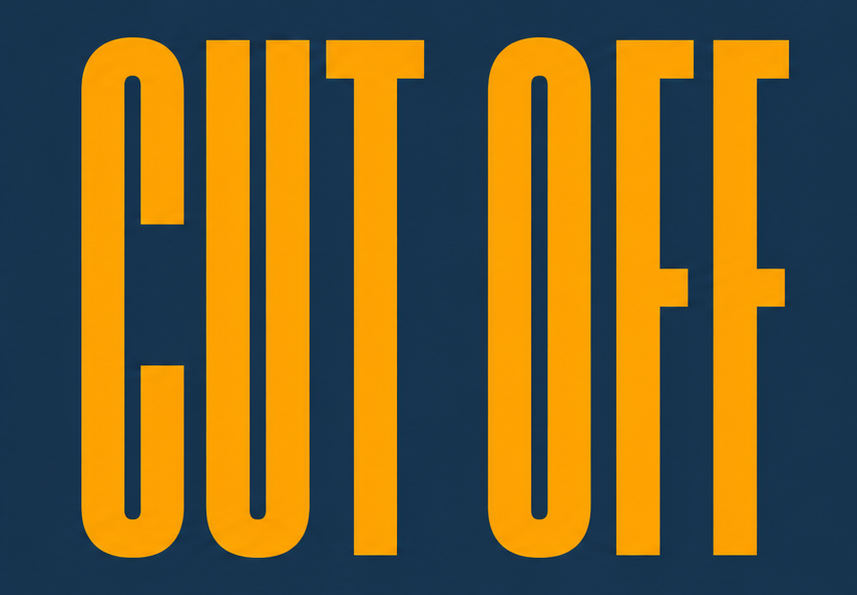
A map to help estranged parents understand the forces behind family cutoffs, grieve a loss the culture refuses to name, and stay whole while the door stays open. Cut Off navigates those forces with the research cited, so you can trade a verdict you never understood for an account you can finally hold.
© 2026. RichardLBlake.com. All rights reserved.

